
Free Sleep Calculator: Plan Your Bedtime & Wake-Up Time
Understanding your sleep schedule starts with knowing how much time you allow for rest. Our free sleep calculator helps you explore your bedtime, wake-up time and estimated sleep duration in one place.
Whether you are reviewing your current routine or planning a more consistent sleep schedule, the calculator offers a simple way to put your sleeping habits into perspective. It also considers selected lifestyle factors that may influence sleep.
Use the tool below to explore your schedule, then read our guide to sleep cycles, recommended sleep duration and healthier sleeping habits.
Sleep Cycle Assessment
Enter your typical sleep window & daily habits
Assessment Summary
Planned sleep duration & lifestyle habit overview
Review your estimated duration and selected lifestyle habits below.
0
/ 100 SCOREHow to Use Our Sleep Calculator
Our sleep calculator provides an educational overview of your sleep schedule using the information you enter.
Start by completing the available sleep-time fields and selecting the lifestyle factors that reflect your usual habits. The tool then presents an estimated assessment based on those responses.
The updated results include:
- Assessment Summary: An overview of the information submitted.
- Numerical score: A general questionnaire-based assessment score, not a clinically validated sleep-quality measurement.
- Estimated Shortfall: An indicative comparison between the user-entered sleep window and a reference amount. It does not measure actual sleep duration.
- Habit Impact: A summary of the selected lifestyle factors that may influence sleep.
These results provide context rather than a diagnosis. The calculator cannot determine how deeply you slept, measure physiological sleep stages or establish whether you have a sleep disorder.
After reviewing the summary, you can use the Re-Calculate function to explore another set of responses.
How Does a Sleep Cycle Calculator Work?
Sleep is not a single, continuous state. Throughout the night, the brain moves through different stages of sleep, broadly divided into non-rapid eye movement (non-REM) sleep and rapid eye movement (REM) sleep.
Non-REM sleep contains three stages, progressing from lighter sleep towards deeper sleep. REM sleep involves different patterns of brain activity and is closely associated with dreaming.
These stages repeat throughout the night. However, their duration and distribution change as sleep progresses.
A sleep cycle calculator generally uses approximate cycle lengths to illustrate possible sleeping schedules. By comparison, our sleep calculator focuses on sleep-time planning and questionnaire-based information. It does not directly identify REM or non-REM stages.
Are Sleep Cycles Always 90 Minutes?
No. Although 90 minutes is a familiar approximation, sleep cycles do not follow an identical timetable.
Cycle length varies between individuals and across the same night. In addition, the proportion of deeper sleep and REM sleep changes over time.
Therefore, a suggested bedtime cannot guarantee that you will wake during a particular sleep stage. Sleep-cycle estimates are best understood as general educational information rather than precise biological predictions.
How Much Sleep Do Adults Need?
According to NHS guidance, most healthy adults generally need around 7–9 hours of sleep per night.
However, individual requirements vary with age, health and daily circumstances. Some people feel well-rested within this range, while others may have different needs.
Sleep duration is also only one aspect of healthy sleep. Regular timing, sufficient uninterrupted rest and how you feel during the day all matter.
For example, spending eight hours in bed does not necessarily mean obtaining eight hours of sleep. The time required to fall asleep and periods of wakefulness can reduce actual sleeping time.
Our sleep calculator helps place your schedule alongside general sleep-duration guidance. It cannot establish your personal biological sleep requirement.
Understanding Sleep Duration and Estimated Sleep Shortfall
Sleep duration refers to the amount of time someone actually spends asleep. This differs from time in bed, which may include periods spent falling asleep or remaining awake.
When people regularly obtain less sleep than they need, the difference can accumulate.
The calculator uses the term Estimated Shortfall to describe an indicative difference between the sleep window entered by the user and a reference amount.
The estimate is based on the entered bedtime and wake-up time rather than directly measured sleep duration. Therefore, it reflects the time allocated for sleep, not necessarily the amount of sleep actually obtained.
For instance, someone who allows seven hours for bed may sleep for less than seven hours because of interruptions or difficulty falling asleep.
Consequently, a calculated shortfall offers only a simplified perspective on the entered sleep window and should not be interpreted as a direct measurement of lost sleep.
What Is Sleep Debt?
Sleep debt describes an accumulated shortfall that develops when someone repeatedly obtains less sleep than they need.
Unlike a single night’s estimated shortfall, sleep debt reflects insufficient sleep across multiple periods.
The two concepts are related but are not interchangeable. A questionnaire-based calculation cannot independently establish an individual’s accumulated physiological sleep debt.
Regularly obtaining sufficient sleep remains more meaningful than relying on a single numerical estimate.
Factors That Can Affect Sleep Quality
Several everyday factors may influence how easily someone falls asleep, stays asleep or feels rested afterwards.
Caffeine Consumption
Caffeine increases alertness and may make falling asleep more difficult, particularly when consumed later in the day.
Its effects vary between individuals. Therefore, a fixed time such as 2 pm should not be treated as a universal biological cut-off.
Alcohol
Alcohol can initially increase feelings of sleepiness. However, it may also disrupt sleep later in the night and contribute to less restful sleep.
Stress and Worry
Stress can make it difficult to relax before bedtime. Persistent worries may also contribute to difficulty falling asleep or returning to sleep after waking.
Screen Exposure
Using phones, tablets or computers close to bedtime may interfere with winding down. Screen light and engaging content can also delay bedtime for some people.
Heavy Evening Meals
Large meals shortly before bed may cause discomfort or indigestion, which can make settling down more difficult.
Irregular Sleep Schedules
Frequently changing bedtime and wake-up time may disrupt the body’s natural sleep–wake rhythm.
The calculator’s Habit Impact section provides a general overview of selected lifestyle factors. However, selecting a factor does not prove that it has caused poor sleep or establish its individual effect.
Tips for Building a Healthier Sleep Routine
Improving sleep habits does not necessarily require a complicated routine. Small, consistent changes may help support a more predictable sleep schedule.
- Maintain consistent sleep times. Going to bed and waking at similar times can help establish a regular routine.
- Allow time to wind down. Quiet activities before bed may help create a calmer transition towards sleep.
- Consider evening caffeine intake. Caffeinated drinks can affect alertness beyond the time they are consumed.
- Create a comfortable sleeping environment. A quiet, dark and comfortably cool room may reduce distractions.
- Limit disruptive screen use. Reducing stimulating activities before bedtime may make it easier to settle.
- Stay physically active. Regular movement can support general wellbeing and healthy sleep.
- Avoid relying on weekend catch-up sleep. A more consistent routine generally provides a steadier foundation than repeatedly alternating between short nights and longer recovery periods.
A sleep calculator can support awareness of bedtime and wake-up patterns. Nevertheless, the most useful routine is one that allows sufficient opportunity for sleep and remains realistic over time.
Frequently Asked Questions
1. What is a sleep calculator?
A sleep calculator is an educational tool that helps people understand or plan sleeping schedules. Depending on its features, it may compare bedtime and wake-up time, estimate sleep duration or present questionnaire-based information. It cannot directly determine actual sleep quality or diagnose sleep-related medical conditions.
2. How accurate is a sleep calculator?
Accuracy depends on the information entered and the method used to produce each result. Time-based estimates can help illustrate a schedule, but they cannot account precisely for interruptions or individual sleep patterns. The assessment score on this page should not be interpreted as a clinically validated measurement.
3. What is the best time to go to bed?
There is no single ideal bedtime for everyone. A suitable schedule depends on when someone needs to wake up, their sleep requirements and their daily routine. Most healthy adults need around 7–9 hours of sleep, although individual needs vary. Regularity also matters.
4. Are 90-minute sleep cycles scientifically accurate?
Ninety minutes is a useful approximation, not a fixed duration. Sleep cycles vary between people and throughout the night. Furthermore, the amount of time spent in REM and non-REM sleep changes as the night progresses. A bedtime calculator cannot reliably identify the precise moment a particular stage will end.
5. What does Estimated Shortfall mean?
Estimated Shortfall is the calculator’s indicative comparison between the user-entered sleep window and a reference amount. It does not measure actual sleep duration, directly measure sleep deprivation or establish accumulated sleep debt. The result should be understood as a simplified educational estimate rather than an individual clinical finding.
6. What is the difference between a sleep calculator and a sleep tracker?
A sleep calculator generally uses entered times or questionnaire responses to produce estimates. A sleep tracker may use wearable or other sensor data to estimate sleep patterns. However, consumer tracking devices also have measurement limitations, and their outputs should not automatically be treated as clinical findings.
7. Can a sleep calculator measure how much REM sleep I get?
No. This calculator does not record brain activity, eye movements or other physiological signals needed to classify sleep stages. Clinical assessment of sleep stages involves specialised measurements. A questionnaire-based estimate cannot establish how much REM sleep an individual has obtained.
8. Can I recover sleep debt by sleeping longer at weekends?
Additional sleep after shorter nights may help someone feel less tired. However, occasional longer sleep periods do not necessarily reverse every effect of repeated sleep restriction. Large changes in weekend sleeping times may also disrupt a regular routine. Consistent, sufficient sleep remains an important foundation for wellbeing.
Sleep Calculator Limitations and Medical Disclaimer
This sleep calculator is provided for general education and sleep-schedule awareness only. Its results are estimates based on submitted information and should not be considered medical assessments.
The tool does not measure brain activity, REM sleep, melatonin levels or physiological sleep quality. It cannot diagnose insomnia, sleep apnoea, narcolepsy or any other sleep disorder.
Its numerical score, Estimated Shortfall and Habit Impact information should not replace clinical evaluation.
If sleep problems persist, cause significant daytime sleepiness or affect everyday activities, a GP or appropriately qualified healthcare professional can provide further assessment.
Adequate sleep is an essential part of health, and prescription medicines are not a substitute for obtaining sufficient sleep.
Best Selling Products

Buy Armodacharge 150 mg Online UK Premium Armodafinil For Extended Focus Demands
£48.00 – £287.00Price range: £48.00 through £287.00
Buy Artvigil 150mg Online Budget Armodafinil for Extended Professional Focus
£45.00 – £289.00Price range: £45.00 through £289.00
Buy Waklert UK Online Professional-Grade Armodafinil for Extended Alertness
£52.00 – £329.00Price range: £52.00 through £329.00
Waklert 150mg UK
£52.00 – £329.00Price range: £52.00 through £329.00
Buy Modalert online UK
£52.00 – £329.00Price range: £52.00 through £329.00Get Updated with Us
Unlike overseas suppliers, waklert.store is UK-dedicated. That means:

UK Clinical & Regulatory Disclaimer This article

UK Clinical & Regulatory Disclaimer This article

UK Clinical & Regulatory Disclaimer This article
UK Clinical & Regulatory Disclaimer This guide
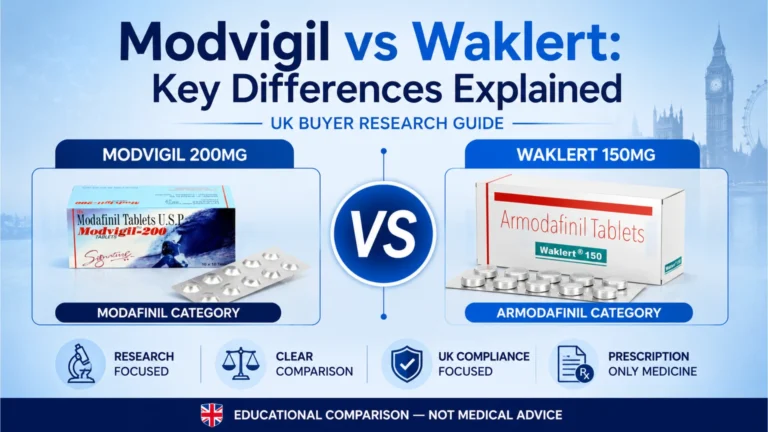
UK Clinical & Regulatory Disclaimer This modvigil

UK Clinical & Regulatory Disclaimer This article
Disclaimer
The information provided on waklert.store is for educational and informational purposes only. It is not intended to replace professional medical advice, diagnosis, or treatment. Always consult a qualified healthcare provider before starting any new medication.